

Thermal Imaging: A Colored Picture Needs an Explanation
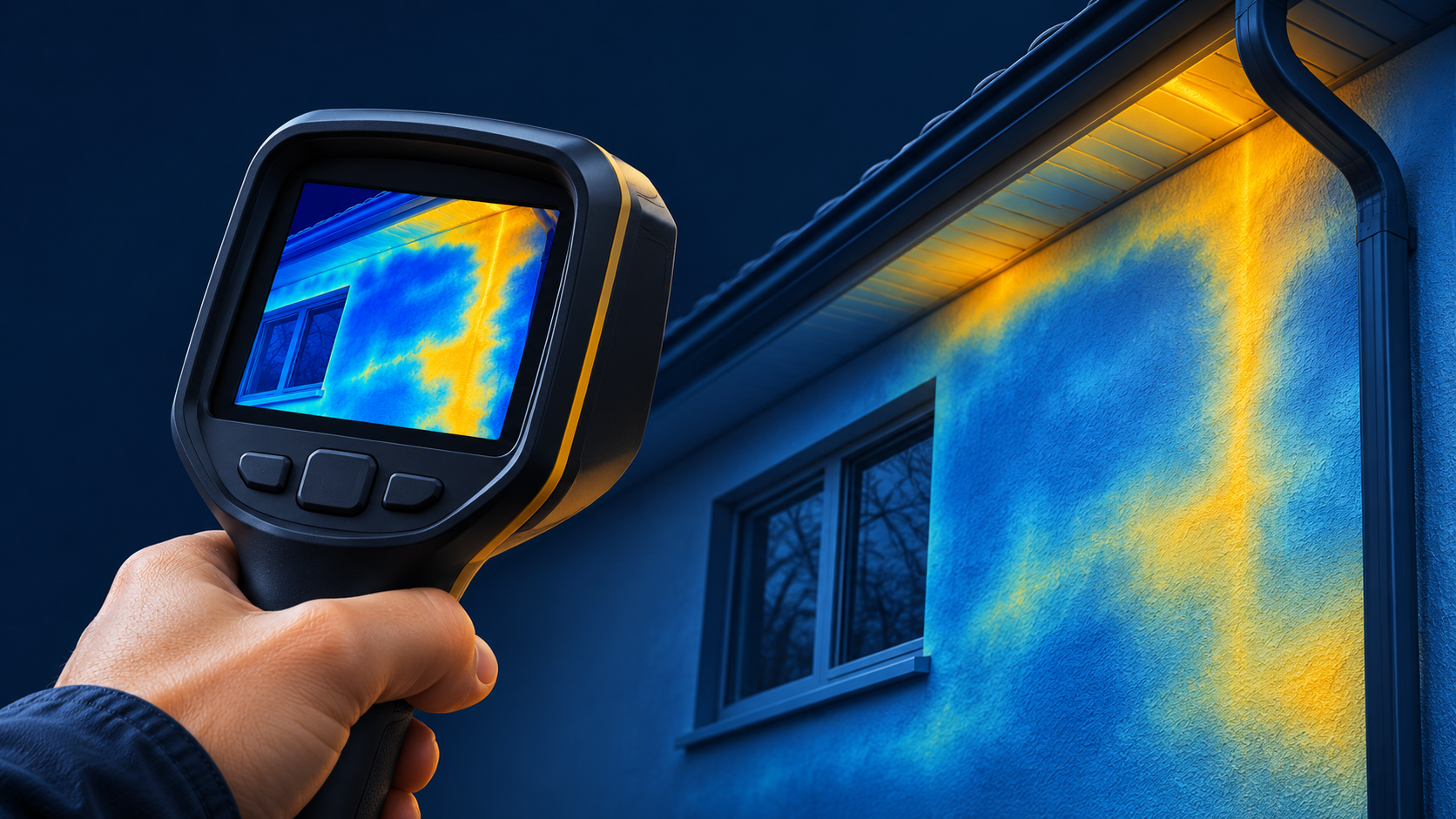
A thermal image can help document a temperature pattern that deserves attention during a home inspection. It should not be read as a photograph of everything hidden inside a wall. For a Lee’s Summit homeowner, the useful questions concern the surface being viewed, the conditions at the time and the additional observations supporting the inspector’s interpretation.
Start with what the image represents
As thermal-camera manufacturer FLIR explains, thermal cameras show surface temperature patterns; they do not see through walls. The colors are a visual representation selected by the equipment, not a direct label for a particular defect. A blue area is not automatically water, and a bright area is not automatically an electrical failure. Interpretation depends on context and the inspection method.
Ask the inspector to identify the location and explain the pattern in ordinary terms. A thermal image is more useful when it is connected to a visible-light photograph and a written observation. Without that context, it can be difficult to tell which room, surface or component the picture represents or what conclusion the inspector actually reached.
Keep the operating conditions with the finding
Temperature patterns can be affected by the surrounding conditions and the materials being viewed. Weather, heating or cooling operation and surface characteristics can influence the available information. A pattern observed during one appointment should not be assumed to appear identically at another time. Retain the report’s description of any relevant limitations.
Do not attempt to create a stronger image by applying unusual heat, cooling or water to a component. Describe normal use and any known concern to the inspector instead. The professional determines what observations can be made under the available conditions. An image that cannot answer a question should remain a limitation rather than being turned into a confident diagnosis.
Separate a suspected concern from confirmed information
A temperature difference may lead the inspector to examine an area more closely or recommend another form of assessment. Ask which additional observation or measurement supports the finding. If the report describes a suspected condition, preserve that distinction when requesting a contractor’s opinion. Do not rewrite it as a confirmed hidden defect.
Likewise, an area without a notable pattern is not a guarantee that every concealed component is satisfactory. A material or condition may not create a useful temperature contrast during the visit. Thermal imaging supplements the inspection; it does not remove the limits of access or make every concealed issue visible through finished surfaces.
Use the report when arranging follow-up
Give the appropriate contractor the thermal image, its matching location information and the written recommendation. Ask what assessment is needed to understand the concern. A contractor should not have to infer the entire finding from a screenshot separated from the report. Include any known history while clearly distinguishing it from the inspector’s current observations.
For a moisture-related question, ask the professional to assess the relevant materials and possible source rather than treating the image as a laboratory result or a picture of mold. For an equipment or electrical question, use the appropriately qualified trade. Do not open equipment, remove wall finishes or touch a suspect component simply to compare it with the image.
Compare later evidence carefully
If work is performed, keep the contractor’s description of what changed. A later thermal image may provide additional information, but two images taken under different conditions are not automatically a controlled comparison. Ask the professional which conclusions the follow-up supports and which conditions could affect the appearance.
A repair verification should identify the original concern and the limits of the return visit. Concealed work may remain outside a visual assessment even when the surface temperature appears different. Keep invoices, relevant photographs and any specialist conclusions together rather than using the later image as the sole record of a completed repair.
Ask focused questions about the service
Before an appointment, ask how thermal imaging is used within the inspection being requested. Confirm whether the service is a general inspection aid or a separately defined assessment. Do not assume that every use of a thermal camera includes a comprehensive energy audit, every electrical connection or every square foot of every wall.
Explain the concern you want assessed and make the relevant area reasonably accessible. Furniture, wall coverings and other obstructions can affect the view. Move ordinary belongings safely in advance when requested, without dismantling components or disturbing a potentially hazardous condition. Good access improves the opportunity to observe but does not turn the camera into a device that sees through everything.
The most valuable thermal finding is one you can connect to a location, an explanation and an appropriate next step. The image is supporting evidence within that process. Its colors should make the observation easier to understand, rather than replace the professional judgment needed to interpret it.
Visit Metro One’s thermal imaging service page to review the service and discuss the concern at your Lee’s Summit property when arranging an appointment.


Comments
Post a Comment